B2B Lead Generation in 2026: How to Build a System That Fills Your Pipeline with Business Clients
Most companies targeting other businesses struggle with the same problem: they know who they want to reach, but they don't have a reliable, repeatable way to find them, contact them, and convert them into clients. The answer isn't one magic tool or one killer campaign — it's building a system.
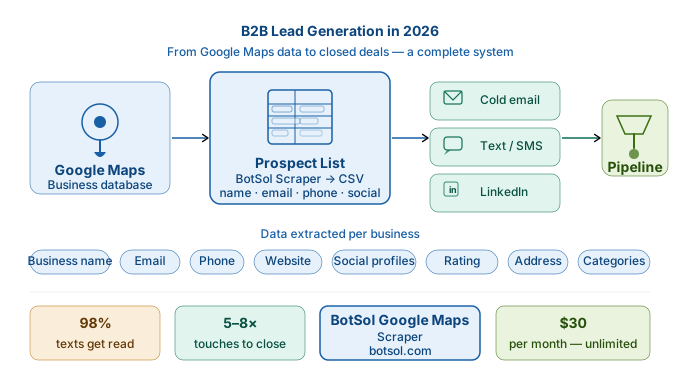
This guide covers the strategies, tools, and mindset you need to build a B2B lead generation machine that actually scales.
Why B2B Lead Generation Is Different
In B2B, you're not selling to individuals browsing their phones at 10pm. You're selling to business owners, managers, and decision-makers who are busy, skeptical of cold outreach, and have real problems they need solved.
That changes everything about how you generate leads:
- Volume isn't the goal — targeting is. 50 highly qualified business contacts beats 5,000 random names.
- You need real contact data. Business email, direct phone, website, industry, location — not just a name.
- Multi-touch outreach works best. Most B2B deals require 5–8 touchpoints before a conversation happens.
- The relationship matters as much as the pitch. B2B buyers research, compare, and talk to peers before deciding.
With that in mind, here's how to build a system that works.
Build a Targeted List of Business Prospects
Everything in B2B lead generation starts with data. If you're reaching out to businesses — whether you sell software, services, marketing, equipment, or anything else — you need a clean, targeted list of the right companies before you do anything else.
Google Maps: An Underrated B2B Data Source
Most people think of Google Maps as a navigation app. Smart B2B marketers see it as one of the most comprehensive, always-updated databases of local and national businesses on the internet.
Every business on Google Maps has a profile containing their name, phone number, website, address, category, hours, reviews, and often links to social media profiles. For anyone selling to local or regional businesses — agencies, contractors, restaurants, medical practices, gyms, law firms, retail shops — this is a goldmine.
BotSol's Google Maps Scraper lets you extract all of that data at scale and export it directly to CSV or Excel for your outreach campaigns. You simply search for your target business type and location in Google Maps, click Start, and the tool collects:
- Business name, phone, and website
- Email address (scraped from business websites where publicly available)
- Social media profiles — Facebook, Instagram, LinkedIn, Twitter, TikTok, YouTube, Pinterest, and more
- Full address broken down by city, state, and zip code
- Business category, average rating, and review count
- Hours, services, features, and booking URLs
You can filter and target by niche and geography as precisely as you want — "marketing agencies in Chicago," "plumbers in Austin," "dental clinics in Miami" — and build a fresh, relevant prospect list in minutes rather than days.
There's a free version available to test the tool before committing, and paid plans start at $30/month (1 PC, unlimited scraping) or $50/month for the Pro plan (3 PCs, automated multi-search runs with no manual input required).
Other Tools Worth Using for B2B Prospecting
Google Maps isn't the only data source — and a strong B2B system uses multiple inputs. Here are some well-known tools that work well for different use cases:
The gold standard for targeting professionals by job title, company size, industry, and seniority. If you're selling to decision-makers at mid-size or enterprise companies, this is worth the investment. It delivers highly accurate contact data for corporate prospects.
A popular all-in-one prospecting platform with a large database of B2B contacts, built-in email sequencing, and CRM integrations. Particularly good for tech and SaaS companies looking to build outbound email campaigns at scale.
Specializes in finding and verifying professional email addresses. If you already have a company name or domain, Hunter can help you find the right person's email quickly. Great as a supplement to other tools.
Now part of HubSpot, Clearbit enriches your existing lead data by appending company information, technographics, and firmographics. Useful when you have partial data and want to fill in the gaps.
One of the largest B2B contact databases available, covering company org charts, direct dials, and intent data. Enterprise-grade and priced accordingly, but powerful for large-scale prospecting.
The key is to match your tool to your target. If you're going after local businesses — contractors, agencies, clinics, retailers, restaurants — BotSol's Google Maps Scraper will get you there faster and cheaper than enterprise tools designed for corporate prospecting. Many B2B teams use a combination: Google Maps or Apollo for volume, LinkedIn for precision targeting, and Hunter to verify emails before sending.
Open the Conversation the Right Way
Having a great list means nothing if your outreach falls flat. In B2B, the goal of the first touchpoint isn't to make a sale — it's to start a conversation.
Cold Email Done Right
Cold email is still one of the most effective B2B outreach channels when done well. A few principles that matter:
- Personalize beyond the first name. Reference their industry, location, or something specific about their business. "I noticed you're a marketing agency in Denver with strong Google reviews" lands differently than "Hi [First Name]."
- Lead with their problem, not your product. The first email should be about them, not you.
- Keep it short. Three to five sentences max. One clear call to action. No attachments.
- Follow up. Most replies come on the third, fourth, or fifth email. One and done doesn't work.
Text and Phone Outreach
For local business outreach especially, text messaging is increasingly effective. Research shows that 98% of text messages get read — even from unknown numbers — compared to just 11% of cold calls that get answered.
If you're reaching out to a business owner whose number you've pulled from Google Maps, a short, direct text introducing yourself and your offer can open doors that email and phone calls can't. Keep it brief, human, and low-pressure, and always give them an easy way to respond or book a call.
LinkedIn Outreach
For corporate or professional targets, LinkedIn messages (especially InMail through Sales Navigator) get strong open rates because the context is inherently professional. Connect first with a short personal note, then follow up with value before making any ask.
Nurture Prospects Until They're Ready to Buy
Most B2B buyers aren't ready to purchase the first time you reach out. Research consistently shows that only 3–5% of your target market is actively looking to buy at any given moment. The other 95% are potential future customers — if you stay visible and relevant to them over time.
This is where content, email nurturing, and social media come in.
- Email sequences keep your brand in front of prospects who didn't respond immediately. A simple 5–7 email nurture sequence spread over several weeks — offering useful content, case studies, or insights relevant to their business — keeps you top of mind without being pushy.
- LinkedIn and social content let you demonstrate expertise to an audience that includes your target buyers. When a prospect sees you consistently sharing valuable insights, they build trust in you before you ever speak to them.
- Webinars and live events give prospects a low-commitment way to engage with you and experience your expertise firsthand. One hour of your time can reach hundreds of potential clients.
Convert — and Then Cross-Sell
Getting a business to become a client is the hard part. But here's something most B2B salespeople underestimate: the first sale is the hardest sale you'll ever make to that client.
Once someone has bought from you and had a good experience, they already trust you, know how you operate, and are far more likely to say yes to additional products or services. The businesses that grow fastest don't just keep acquiring new clients — they maximize the value of the clients they already have.
After each new client comes on board, map out the next logical thing you can offer them. A simple email that opens with something like "I was reviewing our work together and realized I never mentioned [X] — I think it would be a great fit for your business" is a disarmingly effective way to open that conversation. It's honest, low-pressure, and shows you're thinking about their interests.
Cross-selling deepens relationships, increases retention, and can dramatically improve your revenue per client — often without any additional lead generation cost.
Track Your Numbers
You can't improve what you don't measure. In B2B lead generation, the numbers that matter most are:
- Cost per lead — how much are you spending to get each prospect into your pipeline?
- Lead-to-meeting rate — what percentage of prospects agree to a call or demo?
- Meeting-to-close rate — how many conversations turn into paying clients?
- Customer lifetime value — how much revenue does the average client generate over time?
When you know these numbers, you can make confident decisions about where to invest. If a particular channel is generating leads at $20 each that close at 20%, you scale it. If another is generating leads at $80 that rarely convert, you cut it or fix it.
Putting It All Together
A practical B2B lead generation system for most businesses looks something like this:
- Build your prospect list — use BotSol's Google Maps Scraper for local/regional businesses, LinkedIn Sales Navigator or Apollo for corporate targets, and Hunter.io to verify emails.
- Open conversations — cold email, text outreach, or LinkedIn depending on your audience.
- Nurture over time — email sequences, social content, and occasional events keep you visible to prospects not yet ready to buy.
- Convert with follow-up — most deals close after multiple touchpoints, so have a structured follow-up process.
- Grow existing accounts — cross-sell and ask for referrals once you've earned trust.
- Track everything — know your numbers so you can invest confidently and improve continuously.
B2B lead generation isn't about finding one magic tactic. It's about building a reliable system with multiple channels, quality data, and consistent follow-through. Start with the right tools, be patient with the process, and the pipeline will follow.
Looking to build a list of targeted business prospects fast? Try BotSol's Google Maps Scraper free — extract business names, emails, phone numbers, and social media profiles from Google Maps and export directly to CSV or Excel. No technical skills needed.
Get Started Free →